Fremont Model-First Repair Desk Published Fremont cost ranges
Fremont Home Appliance Repair model-first logo mark Fremont Home Appliance RepairSub-Zero repair & service for Fremont
5.0 ratingFremont Sub-Zero service
Call (510) 390-9712 Book Online

Wine temperature

Wine storage drift needs a temperature log before a parts list

A Sub-Zero wine unit in Fremont that drifts several degrees should be checked with an independent thermometer log, model tag, door seal compression, condenser airflow and cabinet ventilation before controls or sealed-system work are named. Bottle value and drift speed decide urgency.

Last updated: June 6, 2026. Fremont, CA.

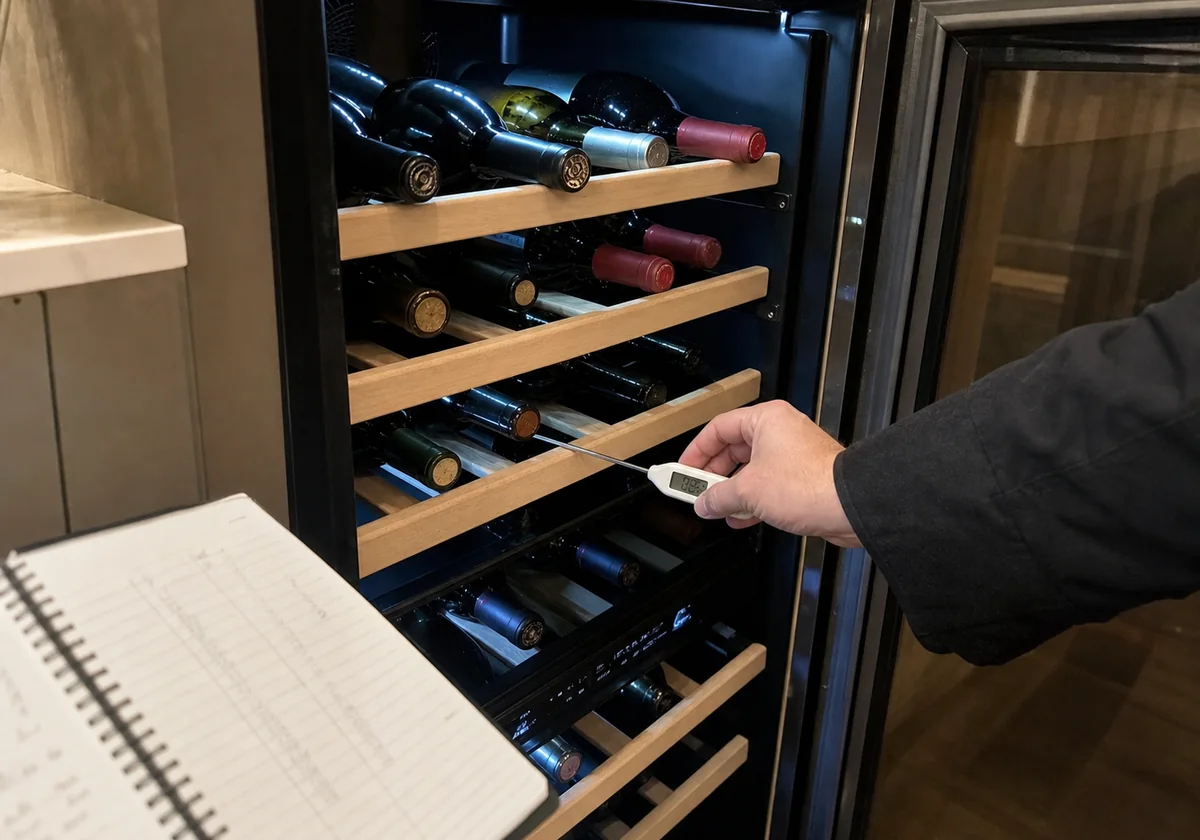
Hand checking wine storage temperature with a thermometer probe in a wine column
Wine drift comes down to a few facts: measured drift, set point, room heat, door seal condition and when to protect bottles while diagnosis is pending.

Direct answer

Wine Storage: short answer

A Sub-Zero wine unit in Fremont that drifts several degrees should be checked with an independent thermometer log, model tag, door seal compression, condenser airflow and cabinet ventilation before controls or sealed-system work are named. Bottle value and drift speed decide urgency.

Typical planning ranges: diagnostic $145–$215; gasket or frost-line $410–$960; ice maker or water line $320–$910; controls or sensors $410–$1,380; sealed system $1,500–$3,750 after proof. Final quote depends on model, part availability, access and diagnosis.

Fremont triage facts

Fast facts for Fremont Sub-Zero owners

Symptom
Name the first compartment or function that changed: fresh-food, freezer, ice, alarm, gasket, wine storage or water path.
Model proof
Use the model and serial tag instead of a typed guess or purchase paperwork.
Urgency
Both compartments warming, leaks, repeated alarms and food-safety risk outrank cosmetic frost.
Local route/access
Mission San Jose, Niles, Warm Springs and Ardenwood can change travel, cabinet access and part planning.
What not to guess
Do not approve compressor, board or sealed-system work before test evidence supports it.

Wine drift comes down to a few facts: measured drift, set point, room heat, door seal condition and when to protect bottles while diagnosis is pending.

Table

Fremont Sub-Zero wine unit planning ranges

These planning ranges cover the wine-storage symptoms we see most across Fremont, from Mission San Jose estate wine columns to Warm Springs integrated units; your final quote depends on model, part availability, access and diagnosis.

Service / symptomWhat's includedFremont rangeTime
Diagnostic / service callModel + serial, two temperatures, condenser airflow, visual check$145–$21545–90 min
Wine unit cooling / dual-zone / thermistorZone diagnosis, thermistor, fan, seal$330–$1,2001–4 hr
Thermistor / temperature sensorSensor test and replacement$270–$5601–2 hr
Evaporator / condenser fan motorFan motor, blade, wiring$360–$7201–2 hr

Where a Fremont wine job lands in these ranges depends on the model family (classic 600/700 vs BI built-ins vs Designer/IT columns vs PRO vs dedicated wine units), part lead time, how much panel-ready cabinet access the install allows, the inland-heat condenser load that builds during 85–100°F Fremont heat waves, and hard-water scale (~5–8 grains/gallon on ACWD supply) on any water-fed components.

Step by step

How to log and check a Sub-Zero wine unit that drifts off temperature

Before naming a part, build a short evidence log so a Fremont wine drift is judged on readings, not guesses.

A Sub-Zero wine unit typically holds near 55°F (or per set zone); an afternoon drift over ~5°F points to airflow, condenser, or door-seal issues.

  1. Confirm the set point and modelNote the zone set point (most Sub-Zero wine units target near 55°F) and photograph the model and serial tag, since classic, Designer column and dual-zone wine units use different sensors and fans.
  2. Place an independent thermometerPut a calibrated thermometer or probe on a middle shelf and log the reading hourly for a day, including hot Fremont afternoons when inland temperatures climb to 85–100°F.
  3. Track the drift against the roomCompare each log entry to the set point and to room heat near the unit; a swing that appears only on warm afternoons usually points to condenser load or cabinet ventilation rather than a failed sensor.
  4. Check airflow, seals and condenserFeel the door seal with a paper-pull test, confirm the grille and condenser are clear of the dust that builds quickly in dry Fremont air, and listen for the evaporator and condenser fans running.
  5. Decide on dual-zone or sensor diagnosisIf one zone holds and the other drifts, or the drift stays above ~5°F after airflow and seal checks, log it and book a thermistor, fan or zone diagnosis before any sealed-system work is named.

Table

Symptom to appointment urgency matrix

The first symptom determines urgency better than a generic service category.

SymptomUrgencyFirst evidenceLikely page
Fresh-food warm, freezer coldSame day if food is at risk; otherwise next route windowBoth temperatures, fan sound, condenser grille photosub-zero-not-cooling-diagnostic
Both compartments warmingUrgent same-day triage when availableTemperature trend, alarm state, condenser airflow, power event notessame-day-emergency-service
Frost line or warm door edgePrompt but not usually sealed-system urgentDoor photo, paper-pull feel, cabinet reveal, humidity timingsub-zero-door-gasket-seal-repair
Slow ice or hollow cubesSame or next day depending leaks and temperatureFilter age, freezer temperature, fill-tube or valve photosub-zero-ice-maker-water-line
Alarm after resetUrgent when temperature is rising or alarm repeatsDisplay photo, model tag, readings before resetsub-zero-error-codes-alarms
Wine column driftPriority depends on bottle value and drift speedIndependent thermometer log, set point, room conditionsub-zero-wine-storage-temperature

Table

Fremont neighborhoods and dispatch windows

Fremont is wide and mixed: older and newer homes can change cabinet access, water routing and part planning.

Neighborhood / contextWhat changes the visitDispatch noteDetail page
Mission San Jose / Mission HillsLarger custom kitchens and panel-ready installationsPlan floor protection, panel weight and repair-vs-replace context before movement.built-in-refrigerator-cabinet-safe-service
NilesOlder homes, tighter access and older model familiesCheck water routing, floor level and cabinet reveals before assuming a part path.sub-zero-not-cooling-mission-san-jose
Warm SpringsNewer installations with water-side and ice maker complaintsSeparate water pressure, filter age, fill-tube freeze and freezer temperature before ordering modules.sub-zero-ice-maker-warm-springs
ArdenwoodMixed built-in and integrated model patterns with route-window pressureModel tag and ZIP help avoid a second visit for common fan, gasket and ice parts.same-day-emergency-service
Central Fremont / Lake Elizabeth routesWide service geography and mixed home ageKeep the model tag, two readings and lower-grille photo ready before calling or booking.repair-preparation-checklist

Table

Model-first parts table

The model family should be verified before anyone quotes fans, boards, gaskets, valves or ice-maker assemblies.

Sub-Zero familyLikely tag locationWhy it changes partsDetail page
BI / Classic built-inInside cabinet frame, grille area or upper compartment labelFans, gaskets, ice maker assemblies and control parts can vary by serial range.sub-zero-model-number-guide
IT / Designer columnsInterior side wall or behind a service grille depending configurationColumn pairs can make one-side symptoms different from a full refrigerator failure.fremont-sub-zero-model-number-parts-guide
IC / integratedInterior liner or drawer frame areasDrawer, hinge and gasket parts need exact family proof before quote.built-in-refrigerator-cabinet-safe-service
PRO seriesCompartment frame or service-label areaWeight, access and component layout change the service plan.sub-zero-sealed-system-compressor
600 / 700 seriesFresh-food compartment frame, grille or service-label locationOlder part support should be checked before quoting major work.sub-zero-repair-vs-replace
Wine storageInterior frame or label near the control/service areaThermistors, fans and door parts differ from refrigerator columns.sub-zero-wine-storage-temperature
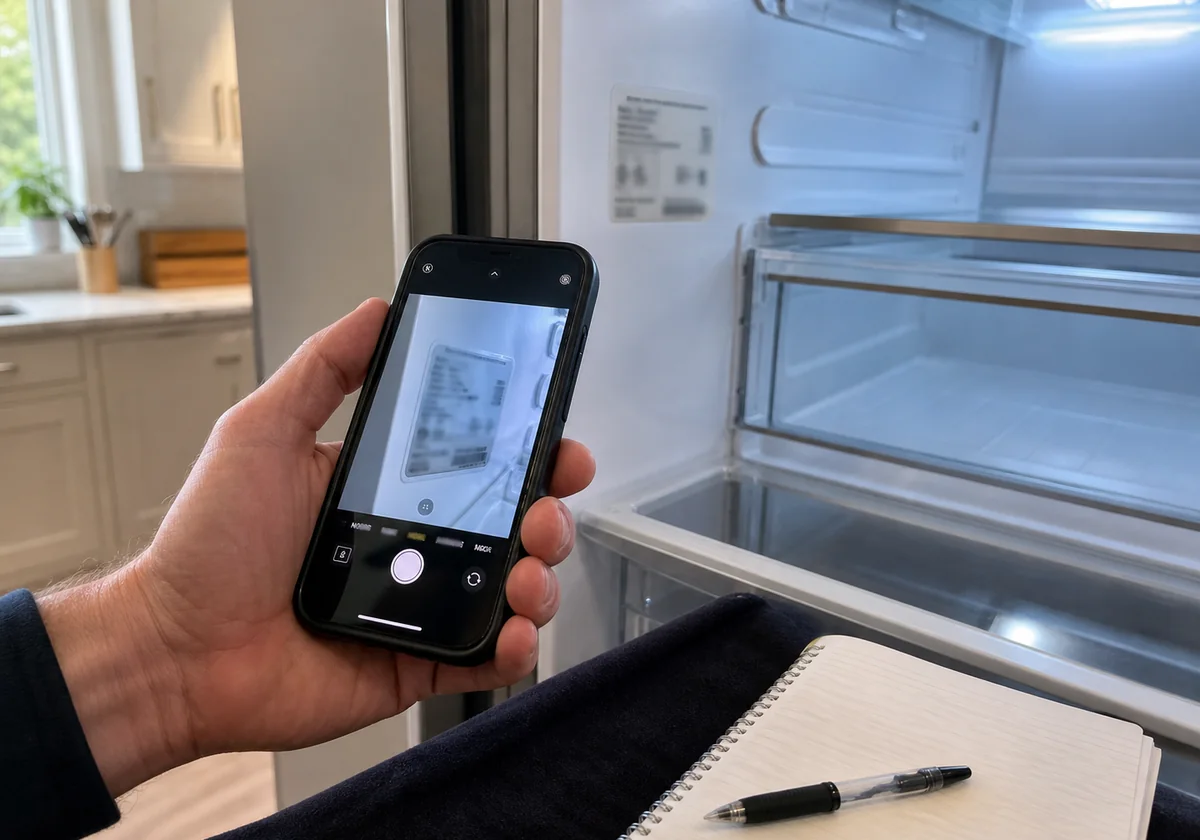
Phone camera photographing a refrigerator model and serial tag before Fremont service
Model and symptom evidence should be ready before parts or code interpretations are discussed.

Local evidence

Fremont details that change the service path

In Fremont, appointment prep should include a model/serial photo, two temperature readings and a photo of the lower grille or water-line area. Those three evidence types help us decide whether the visit is likely to begin with airflow, gasket, water path, control diagnosis or sealed-system verification.

For Fremont homes with custom panels, we plan cabinet-safe pull-out and floor protection before any sealed-system work. Mission San Jose and Mission Hills often bring larger custom kitchens, Niles can bring tighter access and older water routing, Warm Springs often raises water/filter/ice maker questions, and Ardenwood route windows benefit from fast part identification.

For standard Bay Area route conditions, same-day is most realistic when the request includes model proof, symptom timing and food-safety risk. Next-day is safer when a special part, cabinet access plan or model-family check is needed before a productive visit.

Technician process

How the visit should move from symptom to proof

  1. IntakeCollect model tag, serial, ZIP, neighborhood, symptom timeline, food-safety risk and cabinet style.
  2. EvidenceRead actual fresh-food and freezer temperatures, inspect condenser airflow, visible frost, water and door closure.
  3. Access planPlan panel protection, floor protection, water-line slack and safe lower-grille access before movement.
  4. DiagnosisSeparate airflow, gasket, fan, thermistor, board, water path and sealed-system evidence.
  5. QuoteUse published planning ranges only as context; final quote follows verified model, access and part path.
  6. VerificationRecheck temperature recovery, ice fill, alarm status or door compression before closing the visit.

Reviews

What Fremont homeowners say

Real feedback from Fremont homeowners on Sub-Zero refrigerator, freezer, ice maker and wine-storage repairs.

★★★★★ 5.0 Fremont homeowners
★★★★★

Elena V. · Mission San Jose

Our Sub-Zero wine column had been drifting a few degrees every afternoon and I was worried about the bottles. He asked for the model first, set up a thermometer log, and found the airflow issue without jumping to anything expensive. The set point has held steady ever since and the quote was exactly what he said in Fremont.

Sub-Zero wine unit · temperature drift

★★★★★

Marcus T. · Warm Springs

Our Sub-Zero 648PROG wine storage kept climbing past the set point and I didn't want to risk the collection. He arrived on time, checked the door seal and condenser before naming a part, and walked me through honest pricing up front. Bottles are protected again and the temperature has been rock solid here in Warm Springs.

Sub-Zero 648PROG · set point drifting

★★★★★

Priya S. · Ardenwood

The wine zone on our Sub-Zero Designer column was swinging warm and the display alarm kept coming back. I appreciated that he started with the model tag and real readings instead of guessing, and gave a clear quote before any work. Careful, tidy job and the wine unit is holding its set temperature perfectly now in Ardenwood.

Sub-Zero Designer column · wine zone drift

Case notes

Recent Fremont diagnostic case notes

Mission San Jose

Model family: BI-36.

Symptom: Fresh-food section warm, freezer still near target.

Tests: Temperatures, condenser airflow, fan behavior, gasket compression.

Outcome: Airflow path repaired or part scheduled after model proof.

Time: 1-3 hours or second visit if part-specific.

Niles

Model family: 650.

Symptom: Slow ice and hollow cubes after filter change.

Tests: Water pressure, fill volume, fill-tube freeze, freezer temperature.

Outcome: Water-side issue separated from ice-maker module quote.

Time: 1-3 hours depending valve and access.

Warm Springs

Model family: Designer column.

Symptom: Repeated alarm after reset and temperature drift.

Tests: Display photo, serial range, thermistor reading, door state.

Outcome: Control or sensor path quoted only after electrical proof.

Time: 1-4 hours plus part lead time.

Ardenwood

Model family: Wine column.

Symptom: Wine storage drifts several degrees in afternoon.

Tests: Independent thermometer log, condenser, door seal, room heat.

Outcome: Airflow or sensor path verified before sealed-system suspicion.

Time: 1-3 hours plus monitoring.

FAQ

Wine Storage questions Fremont homeowners ask

Is a warm fresh-food side always a compressor problem?

No. A warm fresh-food side with a colder freezer can point to airflow, fan operation, thermistor readings, door sealing, condenser load or control behavior. A compressor quote should wait until those simpler paths have been checked with actual evidence.

What should I avoid when my Sub-Zero is not cooling?

Avoid repeated resets, scraping frost, forcing the refrigerator out of a cabinet opening or defrosting the unit as a permanent fix. Protect food and preserve evidence. Photos, temperatures and symptom timing are more useful than a reset that clears the trail.

Who repairs Sub-Zero refrigerators in Fremont?

Fremont Home Appliance Repair handles Sub-Zero refrigerator, freezer, column, wine-storage, ice maker, gasket and alarm repair across Fremont. Every visit starts with model-first diagnosis before any part is quoted, so you get an accurate plan and a clear price.

How much does Sub-Zero repair cost in Fremont?

Sub-Zero repair in Fremont should be treated as diagnostic-first. Planning ranges on this site list $145–$215 for diagnosis, $410–$960 for common gasket work, $320–$910 for ice maker or water-line work and $1,500–$3,750 for sealed-system work after evidence. Final quote depends on model, parts, access and diagnosis.

What should I check before calling for a Sub-Zero not cooling in Fremont?

Record fresh-food and freezer temperatures, note which compartment changed first, look for frost or door gaps, check whether the lower grille is blocked and photograph the model tag. Do not force a built-in unit out of cabinetry, scrape ice with tools or keep resetting alarms before the evidence is recorded.

How do I find my Sub-Zero model number before a Fremont service visit?

Look for the full model and serial tag inside the compartment, around the cabinet frame, near the grille or in the service-label location described by the manual. Take a square, well-lit photo plus a wider photo showing where the tag sits. Purchase paperwork is weaker evidence than the unit tag.

Should I repair or replace a 15-25 year old Sub-Zero in Fremont?

Repair can still make sense when the cabinet fit is valuable, parts are available and the failure is isolated. Replacement deserves a serious look when multiple major systems are failing, parts are unsupported or a remodel is already changing the opening. Cabinet disruption belongs in the decision, not only appliance age.

Can a Sub-Zero built-in be serviced without damaging custom cabinets in Fremont?

Many checks can begin without moving the unit: model proof, temperatures, condenser airflow, door seal and visible water path. If movement is needed, the visit should plan panel protection, floor protection, water-line slack and cabinet clearance first. Mission San Jose, Mission Hills and Niles kitchens make this especially important.

What temperature should a Sub-Zero wine unit hold?

Most Sub-Zero wine units are set near 55°F, with single zones often between 50°F and 58°F and dual-zone units splitting reds and whites by roughly 10°F. In Fremont, where 94539 Mission San Jose estates run large wine columns, a stable reading within about 2°F of the set point is normal; wider swings deserve a thermometer log.

Why does my Mission San Jose wine column drift warm on summer afternoons?

During Fremont heat waves, inland Mission San Jose afternoons hit 85–100°F, and that heat soak plus a dusty condenser makes the sealed system work harder, so the unit can drift 3–6°F warm by mid-afternoon. Clearing the grille, confirming cabinet ventilation and checking the door seal usually resolves it before any part is named.

Dual-zone wine unit: one side is warm and the other is fine — why?

When one zone holds near its 55°F target and the other drifts, the shared compressor is usually fine; the fault sits in that zone's thermistor, damper, evaporator fan or seal. We diagnose the affected zone separately, a 1–2 hour check, common on Warm Springs and Ardenwood Designer columns before any sealed-system suspicion.

How fast a temperature drift is a real problem?

A slow swing of 2–3°F across a hot Fremont afternoon that recovers overnight is usually airflow or room heat. A drift that climbs past ~5°F and keeps rising, or returns within an hour of a reset, is a real fault. Log readings hourly for a day before booking so the 1–4 hour diagnosis is targeted.

Will a few degrees of drift harm my bottles?

Short swings of 2–4°F around a 55°F set point rarely harm wine, but sustained warmth above ~65°F or repeated cycling ages bottles faster and can push corks. For valuable Mission Hills and Mission San Jose collections, we treat a steady drift over ~5°F as worth a same-week diagnosis to protect the investment.